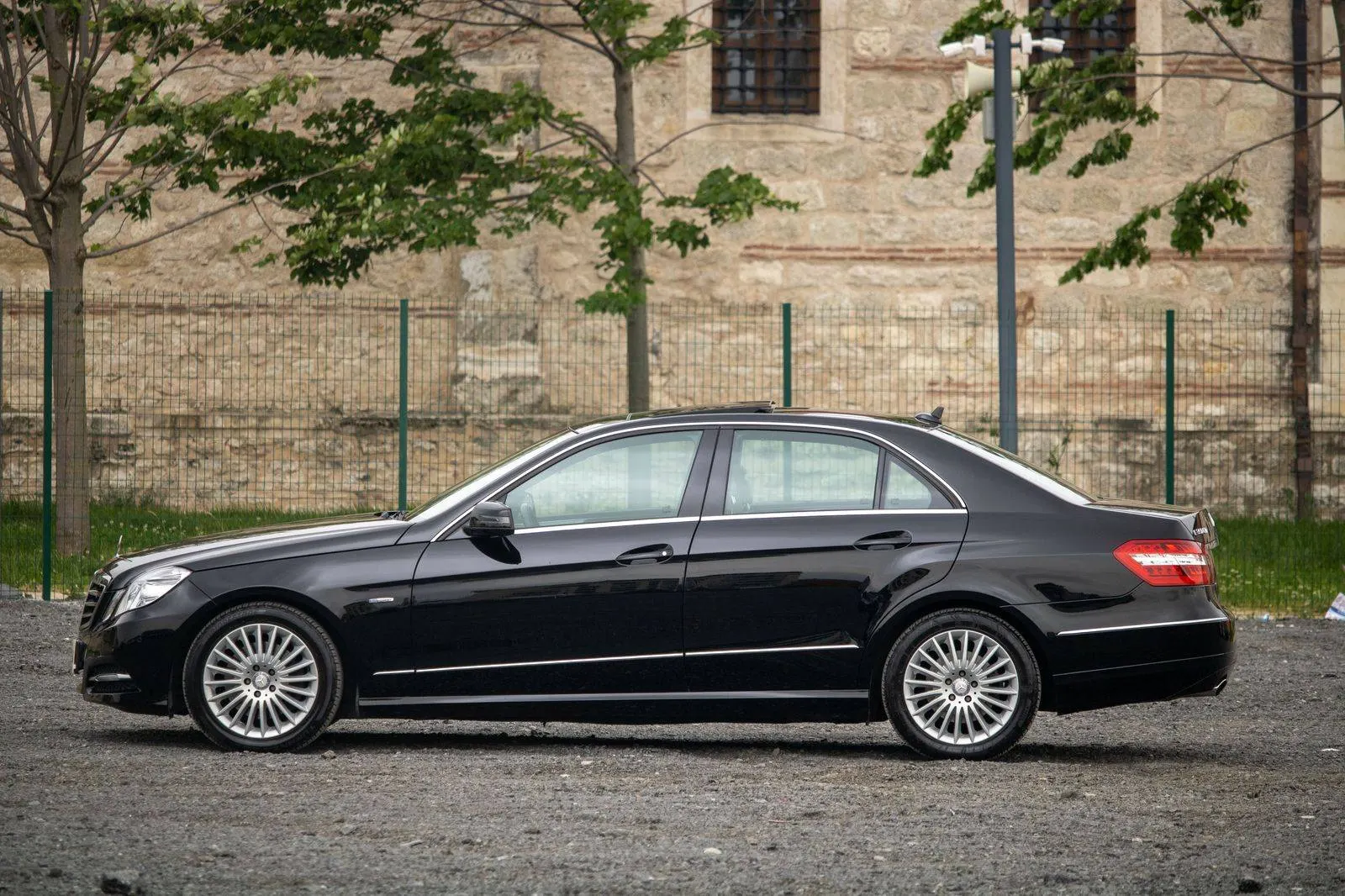










































































































A yearly chauffeur contract with RideRutz.com reserves the same monthly block - 40, 80, 120 or 220 hours - for twelve consecutive months and locks the all-in hourly rate for the whole term. A business sedan stays at $155 an hour and a first-class sedan at $285, taxes and a 20% gratuity included, so an 80-hour sedan contract costs $148,800 for the year, payable month by month as set in the agreement.
What a twelve-month term adds to a monthly programme
A monthly chauffeur service already gives you a reserved chauffeur and a reserved vehicle. A yearly contract adds certainty about the future. The hourly rate of the class you choose is fixed on the day you sign and does not change for twelve months, whatever happens to fuel, wages or insurance in the city. Finance knows the line for the year. The chauffeur and the relief chauffeur are assigned for the term rather than month to month, and the coordinator plans the year with you instead of reacting to it.
Yearly contracts are the usual form for a corporation's executive office, a consulate's standing arrangement, a family office running several residences and a hotel offering a house car. They are also used by people who simply prefer to decide once a year: the chief executive who wants the question of ground transport closed in January, the household that wants the same chauffeur through every season.
The rate lock, in figures
The yearly price is the monthly block multiplied by twelve, at the locked rate:
| Monthly block | Business sedan, 12 months | First-class sedan, 12 months | SUV Business, 12 months | SUV First, 12 months |
|---|---|---|---|---|
| 40 hours | $74,400 | $136,800 | $88,800 | $112,800 |
| 80 hours | $148,800 | $273,600 | $177,600 | $225,600 |
| 120 hours | $223,200 | $410,400 | $266,400 | $338,400 |
| 220 hours | $409,200 | $752,400 | $488,400 | $620,400 |
These are all-in figures in US dollars with taxes and a 20% gratuity included. As with any monthly block, unused hours and miles in a month do not roll over, and hours beyond the block are billed at the same locked hourly rate. Out-of-town hours are the locked rate plus 50%, plus the chauffeur's hotel and a $100 travel allowance on overnight trips. Miles beyond 93 a day, tolls, parking and Wi-Fi are itemised on the monthly invoice.
| All-in rate, USD | Business sedan | First-class sedan | SUV Business | SUV First | Chauffeur only, your car |
|---|---|---|---|---|---|
| Within the city, per hour | $155 | $285 | $185 | $235 | $95 (4-hour minimum) |
| Out of town, per hour (+50%) | $232.50 | $427.50 | $277.50 | $352.50 | $142.50 |
| A 10-hour day within the city | $1,550 | $2,850 | $1,850 | $2,350 | $950 |
| Each mile beyond 93 in a day | $3 | $8 | $4 | $4 | not applicable |
Budgeting a year of ground transport
A budget for chauffeured transport has three lines: the fixed cost, the variable cost and a contingency. The contract makes the first line exact. Take an executive office on an 80-hour business-sedan contract: the fixed cost is $148,800 for the year, all-in. The variable cost depends on habits the office already knows - how often the executive leaves the city, how far a typical day runs, where the car parks. A modest allowance, a small percentage of the fixed cost, normally covers out-of-town hours, extra miles, tolls and parking; it is checked against the real figure at each quarterly review.
The contingency is usually extra hours in the busiest months, and because they are billed at the locked rate they are simple to estimate. Ten extra business-sedan hours in December cost $1,550, whatever happens to prices elsewhere during the year.
One contract, several cities
Many contracts span more than one city: a head office in New York with a regional office in London, a mission with a consulate in Los Angeles and an embassy in Washington, a family that spends the winter in Palm Beach and the summer on the Riviera. Each city can hold its own monthly block on the same contract, with the rate for each class locked for the term and everything invoiced together. Where a city's block is not needed for a season, the agreement can say so in advance, so the summer months on the Riviera and the winter months in Florida are planned rather than wasted. How that is written - which months, which blocks, which notice - is set out in the agreement itself.
The team behind a yearly contract
No single chauffeur can drive every hour of a year. A yearly account therefore has a small named team: a lead chauffeur who drives most days and knows the principal best; a relief chauffeur, introduced in the first weeks, who covers days off, holidays and illness; and a coordinator who plans each month, handles changes, prepares the invoice and runs the quarterly review. Behind them, dispatch is on duty around the clock in every time zone. The team rarely changes during a term, and the written agreement sets out how a change is handled if one becomes necessary - a chauffeur relocating, for example - rather than this page promising timescales that depend on the city.
Governance: reviews, reporting and duty of care
Procurement teams buying a year of chauffeur service usually ask for the same things, and a yearly contract provides them. Each month brings one invoice with every engagement listed by date, hours, class, cost centre and passenger code. Each quarter brings a short review: hours used against the block, out-of-town days, extra miles, and whether the block still fits. The corporate account page explains cost-centre coding and approvals. For duty of care, the trip log shows who travelled, when and with which chauffeur, and the chauffeur standard documents vetting, training and conduct. Buyers who benchmark ground transport through the Global Business Travel Association will recognise the structure: a fixed reserved capacity, transparent variable costs and named accountability.
Renewal
As the term ends, the coordinator prepares a summary of the year - hours, cities, classes, the months that ran over or under - and proposes the block for the next term. Renewing locks the rate again for another twelve months; any change to the published hourly rates applies only from the start of a new term, never during one. If the next year will look different, the contract can move to a different block, a different class or a different mix of cities.
When a year is the right length, and when it is not
A yearly contract suits anyone whose need for a chauffeur is steady and foreseeable. If the need is seasonal or tied to a project - a production, a posting, a campaign - a monthly programme or short-term hire is usually the better fit. If the car is yours and only the chauffeur is needed, a chauffeur for your own car at $95 an hour can be contracted for a year in exactly the same way. For a mission or a consulate, the diplomatic and consular transportation page describes the protocol side of a standing arrangement.
Four contracts, four shapes of year
An executive office in Washington, 80 hours, first-class sedan. The chief executive's working weeks in the capital, board travel to New York by car twice a quarter and the occasional weekend on the Chesapeake. The fixed cost is $273,600 for the year; the out-of-town days to New York are billed at the locked rate plus 50%, with the chauffeur's hotel and allowance on the nights the board meets.
A consulate general in Los Angeles, 120 hours, SUV Business. The consul general's calls across the district, community events at weekends and receptions at the residence. A coordinator adds vehicles for the national day and for ministerial visits on the same contract, at the same locked rates.
A family office with three residences, 40 hours a month in each city. New York in the autumn and spring, Palm Beach in the winter and the south of France in the summer, each city holding its own block in the months the family is there. The agreement records which months each block runs, so no hours are reserved where nobody is.
A five-star hotel's house car, 220 hours, first-class sedan. A chauffeur and a car reserved for the hotel's suite guests every day of the year, invoiced to the property monthly. At $285 an hour the yearly figure is $752,400, and the hotel knows its cost per guest movement before the season starts.
Questions procurement teams ask
Is the rate genuinely fixed? Yes. The hourly rate for each class on the contract does not change during the term. Only variable items - extra miles, out-of-town hours, tolls, parking and Wi-Fi - vary, and each is itemised.
What reporting will we receive? A monthly invoice with every engagement listed and a quarterly review of hours, miles, cities and classes against the block.
How are chauffeurs vetted? Background and driving-record checks before the first engagement and at renewal, the local licence to carry passengers for hire, and our protocol and defensive-driving training, all documented on the chauffeur standard page.
Can we audit trips? Yes. The dispatch log for any engagement - times, chauffeur, vehicle and route summary - is available to the account administrator on request.
Choosing the block for a whole year
The right block is the one that covers an ordinary month, not the busiest one. Extra hours in a peak month are billed at the locked rate, so it is usually cheaper to choose the block your typical month needs and let December run over than to reserve December's hours all year. The coordinator can model the year with you from last year's bookings or calendar, and the first quarterly review is the moment to correct the choice if it was wrong.
Why lock a rate at all
Chauffeur costs follow the costs underneath them: wages, insurance, vehicles and fuel all move from year to year, and in some cities they move quickly. A locked rate moves that uncertainty from your budget to ours for the twelve months of the term. For an organisation that sets its budget once a year, that is often worth more than any discount would be.