









































































































Planning gala transport comes down to three documents and one person: an arrival schedule that puts every guest on the carpet in the order the organiser wants, a staging plan that routes every car to the mark and away from it, a car list that assigns each guest a vehicle and a chauffeur, and a coordinator on the organiser's radio who calls the cars. This guide sets out how RideRutz.com's coordinators build each, what to decide when, and the questions we will ask.
Start with the moment, not the cars
Every gala has a moment the organiser is planning for: the honouree on the steps at 19:00 with the photographers ready, the couple whose arrival opens the evening, the ambassador met at the door by the host. Transport planning starts there and works backwards. Who must be where, at what minute, seen by whom? Once that is written down, the rest - the order of the other arrivals, the collection times, the number of vehicles - follows arithmetically. Start with the cars and the moment gets lost among them.
The arrival schedule
List the guests who will arrive by chauffeured car in carpet order: the ones who go straight in first, the photographed guests in the order the carpet manager wants, the principals last. Give each an arrival window - two minutes for a guest going straight in, five for one stopping on the carpet, a single minute for the honouree - and a collection point. RideRutz.com's coordinator turns the list into collection times worked backwards through the staging route and the traffic at that hour, so that cars from six hotels reach the holding area in carpet order. Guests who arrive on their own are outside the schedule; guests in vehicles the organiser has booked are inside it. The gala and event transportation page shows a finished schedule running.
The staging plan
Walk the venue with its front-of-house and, where the street will be closed, the police liaison, and draw: the holding area where cars wait before the carpet, out of sight and off the public street where possible; the approach; the drop-off mark on the carpet, where the rear kerb-side door should stop; the exit from the carpet; the departure lane where cars wait for the evening; and the private or secondary entrance for guests who will not use the carpet, with its own approach. Note where a wheelchair-accessible vehicle can stop and where its passenger enters. Note what time the police close the street and what passes the closure requires. Photograph everything. RideRutz.com's coordinator does this walk on the day before or the morning of the event and briefs every chauffeur with the diagram.
The car list
| Column | Why it matters |
|---|---|
| Guest or party | Who is in the car; the name the chauffeur uses |
| Collection point and time | Worked back from the arrival window |
| Arrival window | The minute or minutes the car should be on the mark |
| Carpet or private entrance | Which approach the car takes; whether the guest stops |
| Vehicle and class | Sized to the party; the coordinator advises the mix for the venue's street |
| Chauffeur | Named; briefed on the guest and the drill |
| Departure | Which exit door; whether the guest leaves with the same party |
| Registration | For the venue's security and the police pass |
How many vehicles
Count the parties, not the guests: a couple is one car, a table of eight collected from one hotel is one Sprinter, a sponsor's four executives from two hotels are two cars. Add a spare for every twenty. Then check the street: a carpet approach that takes ten sedans in a holding area takes six SUVs, and a venue with a short carpet cannot clear more than one car a minute, which sets the arrival schedule's length. The fleet page lists the classes; the coordinator will tell you the mix the venue can handle.
Permits, passes and the police
Where the carpet street is closed, the police or the city issue vehicle passes; where the venue is in a secure zone or a private estate, its security issues them. Passes need registrations weeks ahead and do not admit a substitute vehicle on the night, so the car list must be final before the pass deadline, with the spare vehicles included. The coordinator submits the list, holds the passes and puts the right pass on the right vehicle. Public-safety conditions on street closures are set by the city; the organiser's production team usually holds the permit and the coordinator works within it.
The coordinator
One RideRutz.com coordinator stands at the drop-off mark with a radio on the organiser's net and a phone to every chauffeur, calls cars forward in carpet order, holds a car when the photographers need another minute, re-sequences when a guest is late, reports arrivals to the organiser and, at the end, calls departures by table. On events of six vehicles or more the coordinator is included; on smaller events, available at a fixed evening rate. The coordinator is the difference between forty cars and one event, and organisers who have run a carpet without one do not do it twice.
Accessibility
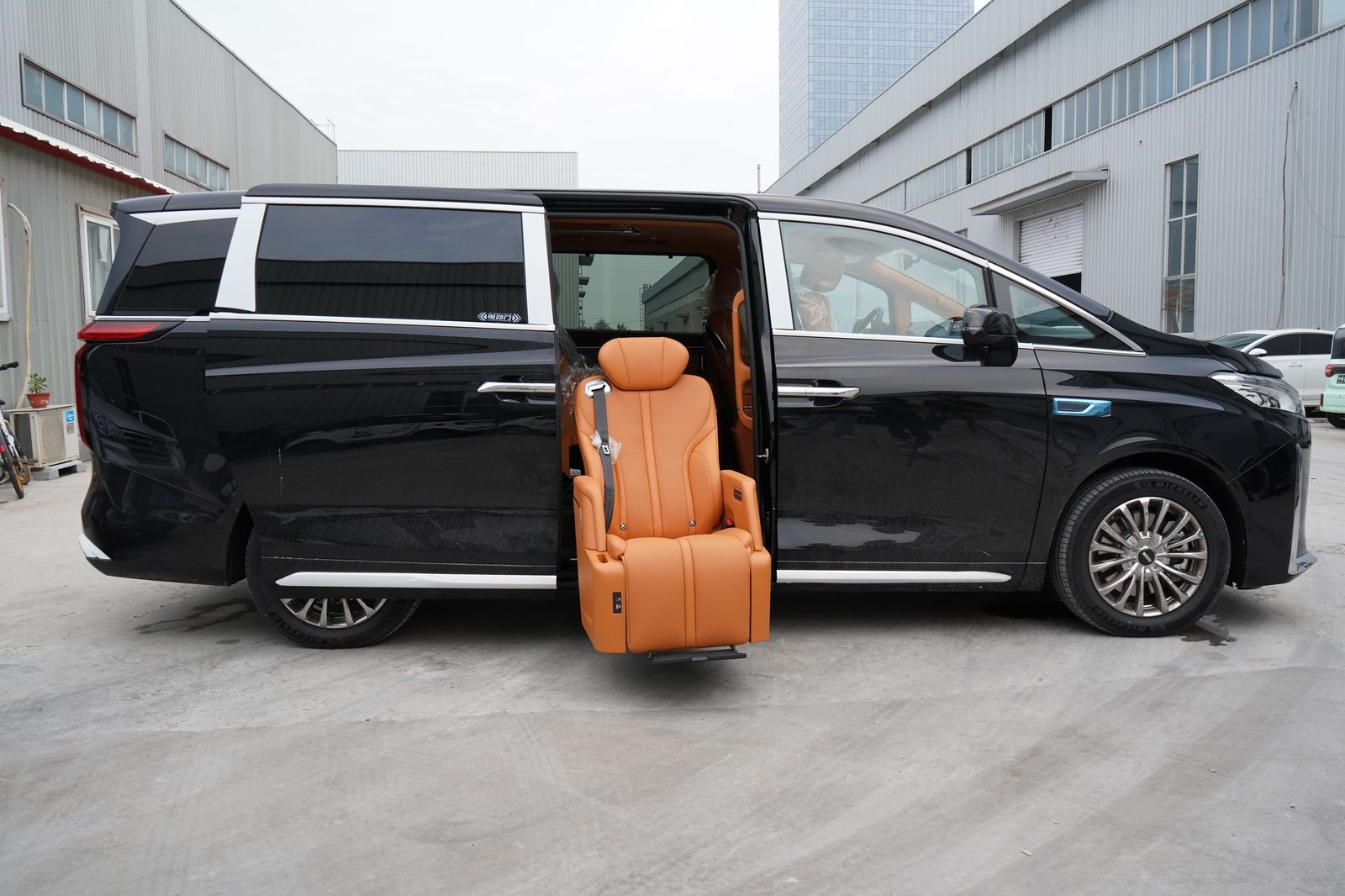
Plan the accessible arrival as carefully as the carpet: a wheelchair-accessible vehicle with a ramp or lift, a stopping point where the ramp can deploy, an entrance with level access, and a chauffeur trained to assist and to wait. Guests who need assistance in and out of a standard car should be noted on the car list. The staging plan shows the accessible route; the coordinator confirms it with the venue.
Departures
Departures are where evenings fail. Every RideRutz.com event car is engaged for the evening and waits in the departure lane; the organiser's team calls departures - "Table four is leaving" - and the coordinator has the right car at the exit door before the guest reaches it. Guests who leave in a different combination from the one they arrived in are re-assigned. Late-night hotel entrances for talent are confirmed with the night manager. Nobody stands on a pavement at midnight.
Talent, diplomats and security
Guests who are public figures are handled under the celebrity transportation standard - the publicist decides whether they are seen, the plan follows, and decoy and departure arrangements are made with the venue's security. Official guests are handled under the diplomatic standard - precedence in the arrival order, flags where the mission's convention applies, the host's protocol office consulted. Guests with protection have their detail brief the security-trained chauffeur on the route and the door drill. The motorcade and protocol etiquette guide sets out precedence for organisers new to it.
What the quote contains
A written plan - the arrival schedule, the staging plan, the car list - and a price per vehicle for the evening by class, with the coordinator, the walk-through, the passes and the radio included and any positioning, accessible vehicles or extended hours itemised. Deposits and cancellation windows are stated; both are longer for award-season and festival dates because vehicles are positioned early. Organisers on a corporate account have the event coded and invoiced once. Guests paying their own way can book on the reservation engine under the event name and join the plan.
The timeline
| When | What to decide |
|---|---|
| 8 weeks out | Venue confirmed; the moment defined; brief sent; RideRutz.com coordinator assigned; vehicles held for the date |
| 6 weeks | Guest list in draft; hotels known; staging walk booked with the venue; pass requirements confirmed with the police or venue |
| 4 weeks | Car list in draft; vehicle mix agreed for the street; accessible arrangements confirmed; talent and official guests' handlers introduced to the coordinator |
| 2 weeks | Car list final for passes; registrations submitted; arrival windows agreed with the carpet manager |
| 1 week | Collection times issued; chauffeurs briefed with the diagram; departure procedure agreed with the organiser's team |
| Day before | Staging walk with front-of-house; radio net and call signs agreed; late changes to the car list |
| The day | Coordinator at the mark from an hour before the first window to the last car |
| Day after | The organiser receives the arrival log and one invoice |
Event production standards from the International Live Events Association and Meeting Professionals International cover the rest of the evening; this guide covers the cars. The worldwide gala calendar shows which weeks in which cities book out first, and the FAQ answers the questions organisers ask most.
Common mistakes, and how the plan prevents them
Booking by guest count rather than party. Forty guests become forty cars on a street that holds ten. The car list counts parties and the coordinator sizes the mix to the venue's approach. A single arrival time for everyone. Every car arrives at 19:00 and the carpet backs up for forty minutes. The arrival schedule spreads windows across the length the approach can clear. No holding area. Cars wait on the closed street and the police move them on. The staging plan finds a holding area off the carpet approach. Forgetting the private entrance. A guest who will not use the carpet arrives at it anyway. The car list records the entrance and the chauffeur is routed accordingly. No departure plan. The evening ends and two hundred people look for forty cars in the dark. Every car waits in the departure lane and is called by radio. Passes submitted late. A substitute vehicle is refused at the closure on the night. The car list is final before the pass deadline, spares included. Nobody on the radio. Cars arrive when their passengers are ready, which is all at once. The coordinator calls them.
Working with the venue and the carpet manager
The venue's front-of-house knows what its street and doors can do; the organiser's carpet manager knows what the photographers need; the police liaison knows what the closure permits. RideRutz.com's coordinator works with all three and does not override any of them: the staging plan is drawn with the venue, the arrival windows are agreed with the carpet manager, the passes are obtained through the liaison. On the night, the coordinator takes the carpet manager's signal for every door and the organiser's call for every departure. Organisers who have a production company or a protocol office already running the carpet should introduce them to the coordinator at the four-week point; the cars then fit the plan they own rather than the other way round.
After the event
The organiser receives an arrival log - every car, the window planned and the minute achieved, the departure time - and one invoice. The log is useful for the next year's plan and for the sponsors who want to know their principals were on the carpet at the minute promised. Organisers who run the same gala annually keep the file open: the staging plan, the car list template and the coordinator carry over, and the second year's planning starts from a working document rather than a blank sheet. The worldwide gala calendar lists the annual evenings RideRutz.com plans around; the film festival and award show transportation page covers the festival week, which is a gala repeated nightly.